.png)

It has now been around eight weeks since work began on the Dorchester Fish Passage and Weir Removal Project. The project is removing a significant barrier to fish movement and creating a new rock ramp, helping to reconnect the river and open up around 18 km of river habitat to fish.
The weir is part of a historic system that divides the River Thame into two channels around Hurst Water Meadow, including the Mill Race, which was created to supply water to Overy Mill. The weir has long played a role in controlling how water is divided between these channels, so the project is more complex than simply removing a barrier from the river. For more background on the project and how the new fish passage has been designed, see our earlier project update.
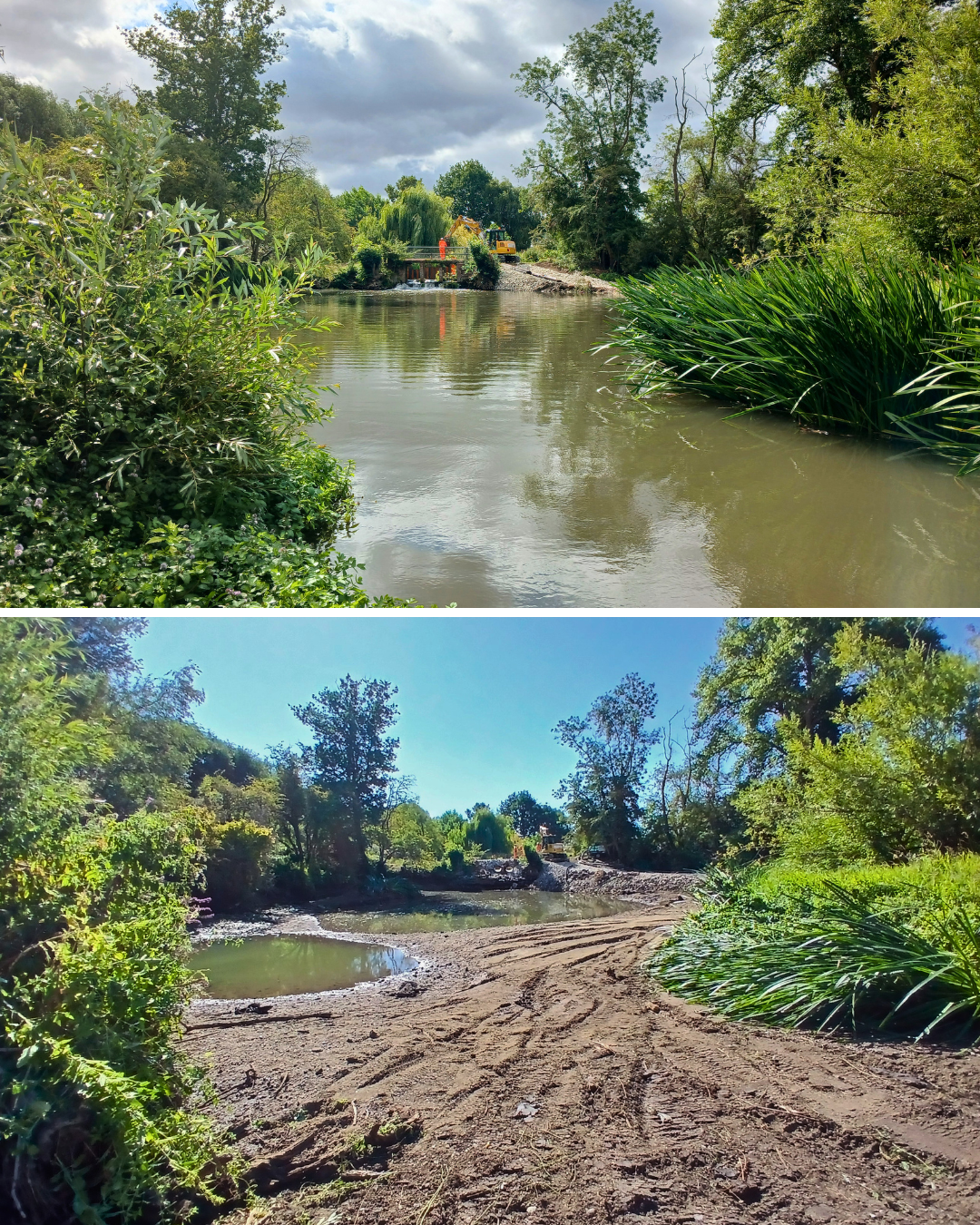
The river itself below the old weir looks particularly striking at this stage, as the working area has been temporarily isolated and dewatered to allow construction to take place.
In order to create a safe, dry working area below the old weir, a temporary barrier was installed upstream of the weir to block the river and direct all of the flow into the Mill Race. To maintain a sustainable flow downstream of the work area, large pumps are transferring water from above the weir to below the construction area.
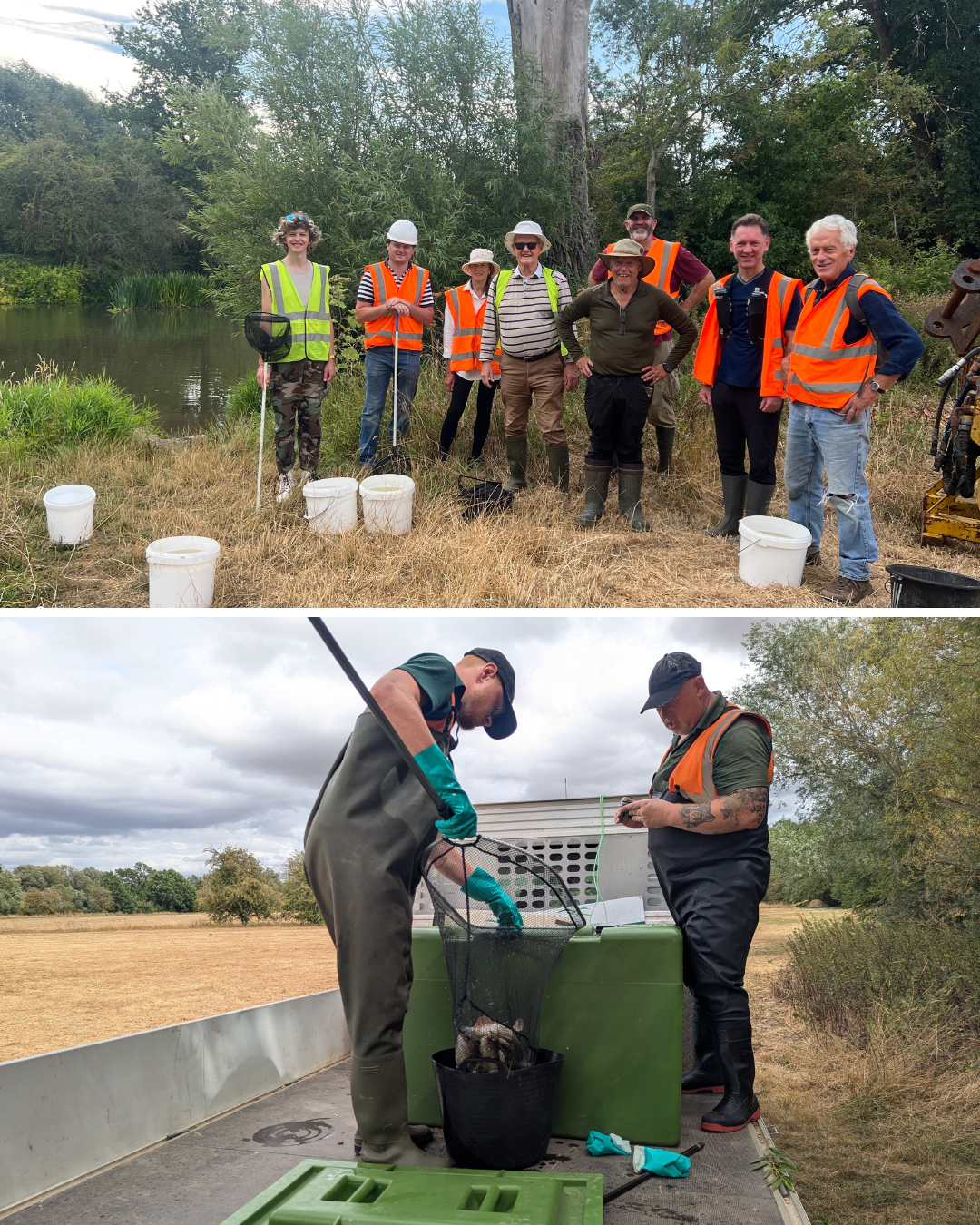
As water levels began to lower, professional fisheries contractors worked alongside RTCT staff and our local Environment Agency Fisheries Officer to carefully capture and relocate fish from the section of the River Thame downstream of the construction area but upstream of the confluence with the mill race. Volunteers were also on site, keeping watch as the water level dropped help monitor.
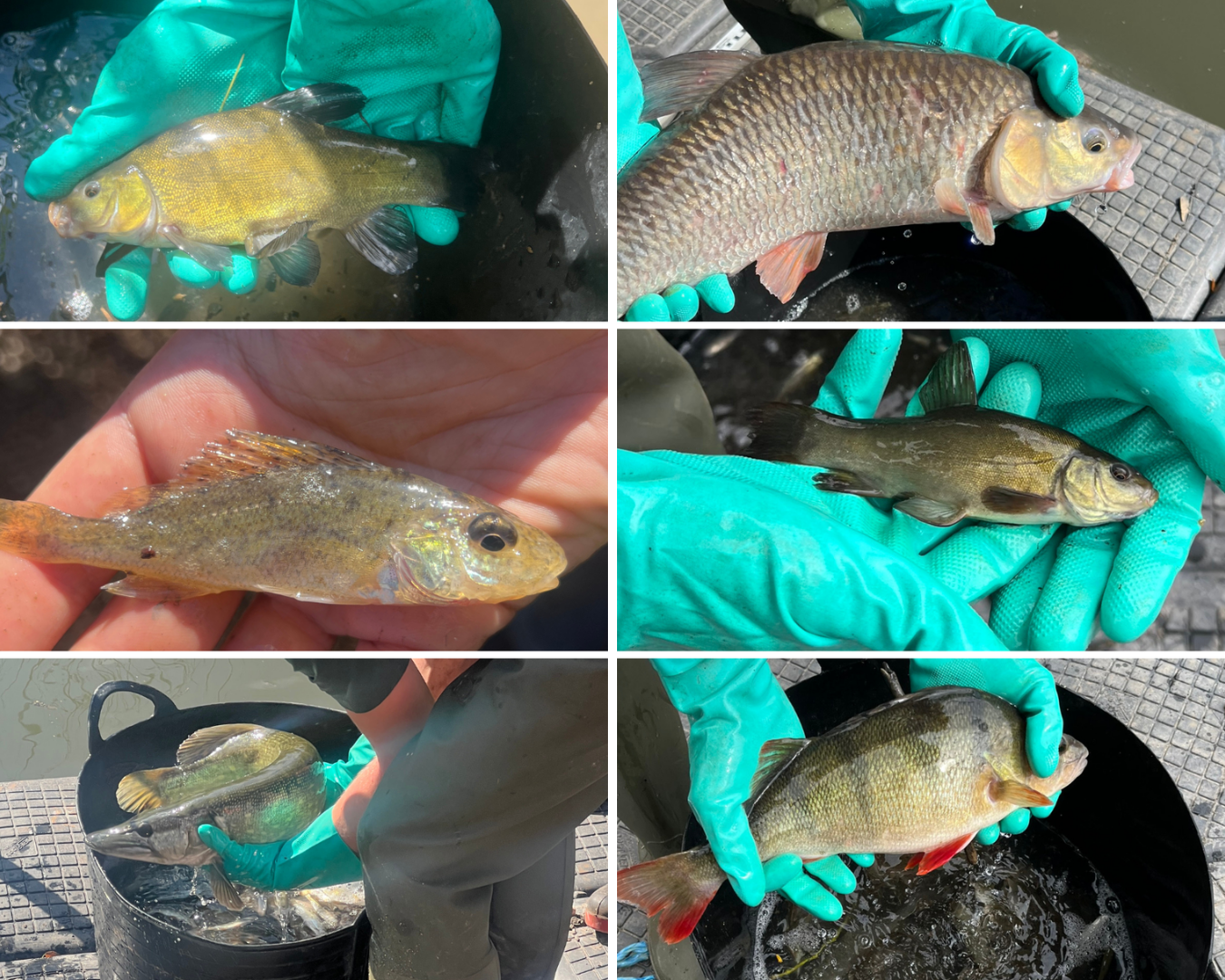
As well as protecting the fish during construction, the rescue gave us an opportunity to get a valuable snapshot of the fish community in this section of the River Thame. We found a diverse mix of species and sizes, including barbel, bream, bullhead, carp, chub, dace, gudgeon, minnow, perch, pike, roach, ruff and tench. The fish ranged from small minnows and gudgeon to some impressively large chub and pike, with species using different parts of the river and feeding in different ways. All of the fish were safely relocated to the Mill Race.
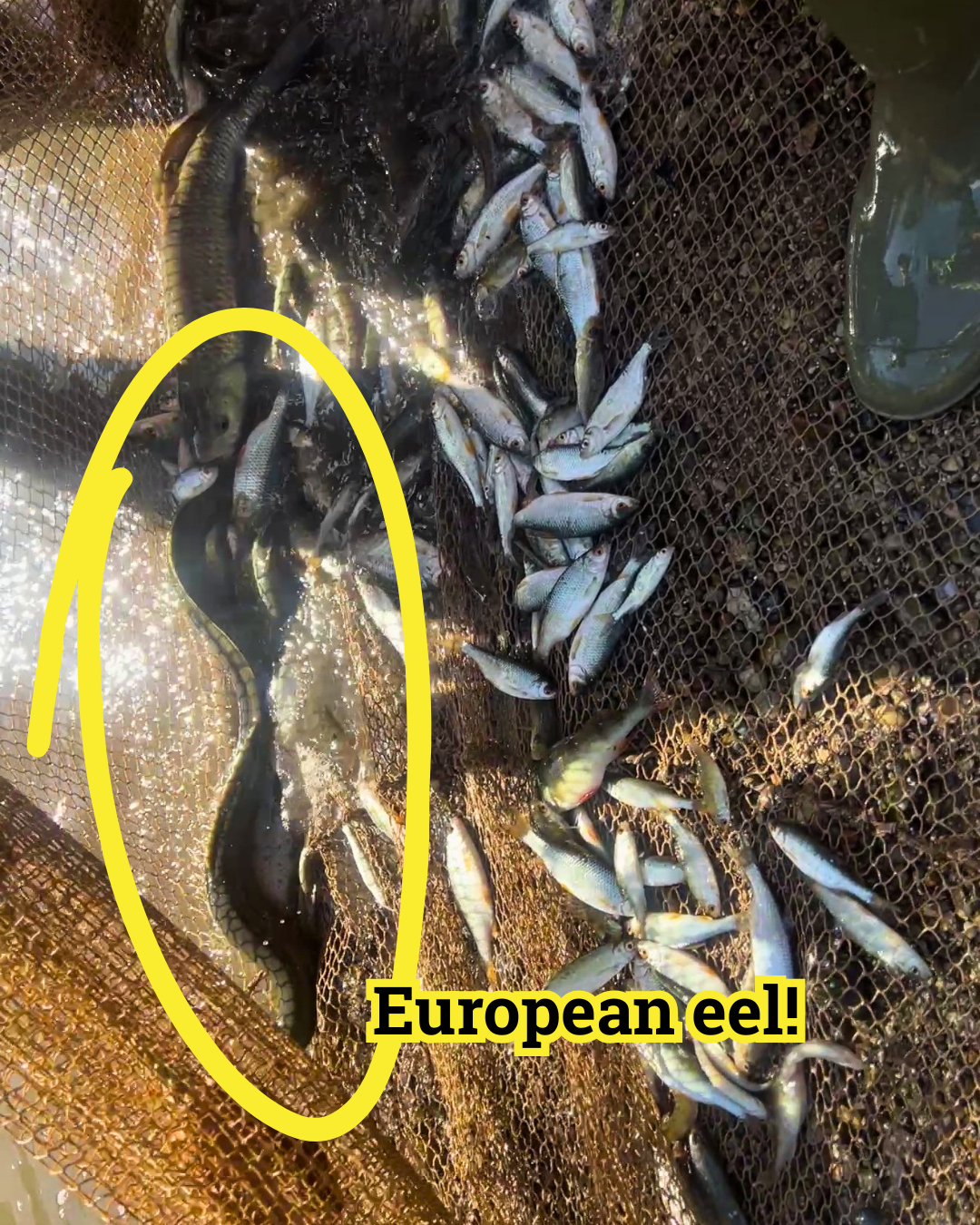
Among the fish we found was one particularly exciting discovery: a European eel. Eels are now a relatively rare sight in our rivers. European eel numbers have declined dramatically over the last few decades, with the number of young eels arriving in European waters now a tiny fraction of historical levels. The species is classified as Critically Endangered, making every record particularly significant.
A significant stage of the construction has been the removal of the side weir at the top of Buck Pool. The deteriorating bridge deck over the weir, including its piers, and the majority of the side weir itself have now been removed. The spill weir, which sits alongside the former side weir, will remain in place and has not been altered as part of these works.
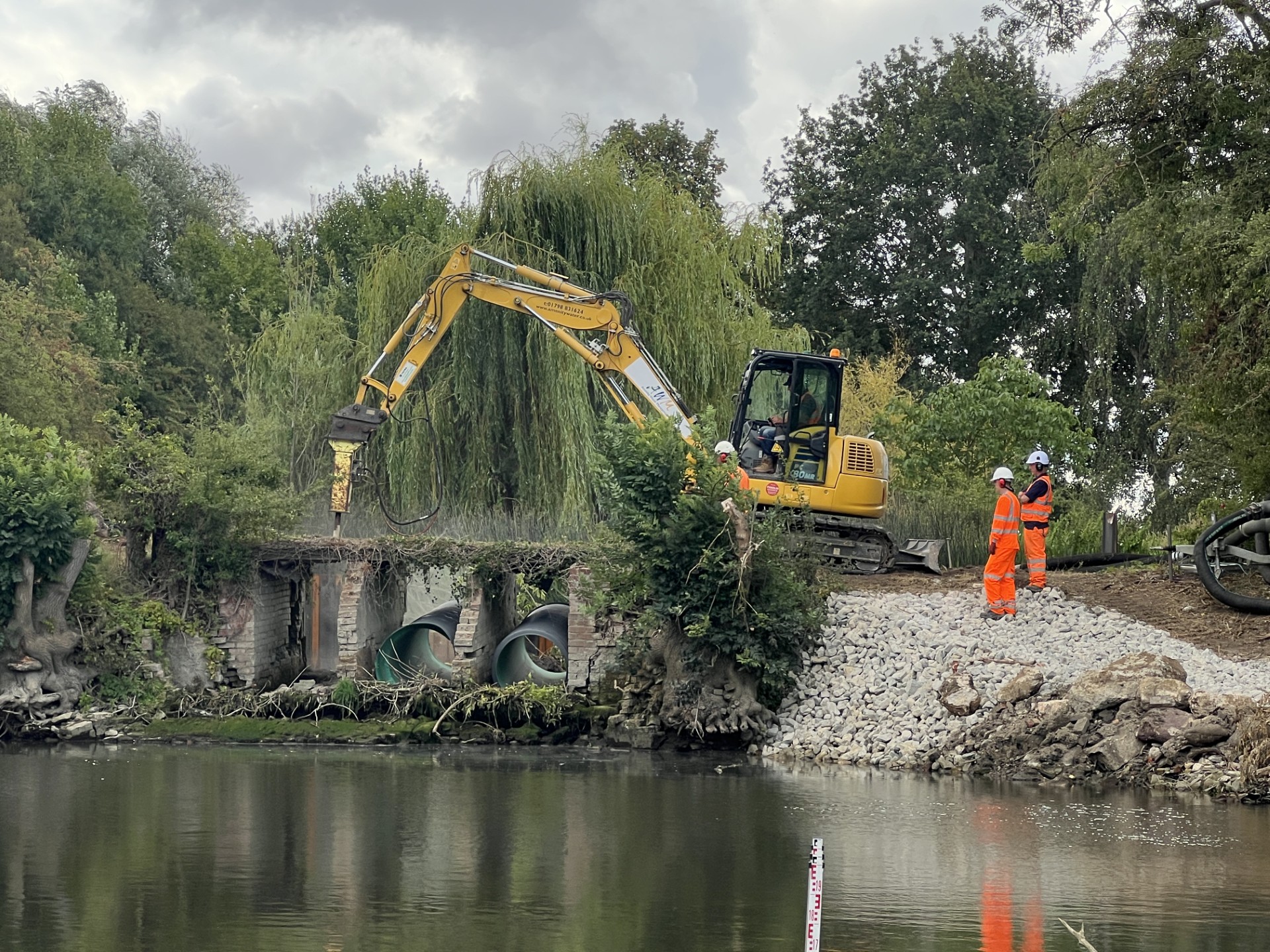
As the site is excavated and reshaped, an archaeologist is maintaining a watching brief during all key excavations. This helps ensure that any archaeological features or finds uncovered during the works are identified and appropriately recorded.

The area around the former side weir has now been reshaped,with sheet piling and rock armour installed to provide structural support andprotect against erosion.
.png)
The second main area of work is downstream of the Buck Pool, where the new rock ramp is being constructed. A rock ramp is a gently sloping channel made from large rocks and boulders, designed to replace the steep drop created by a weir with a series of smaller changes in water level. Instead of having to negotiate one large vertical barrier, fish can move through the ramp gradually, swimming between areas of faster and slower-flowing water as they make their way upstream.

The new ramp needs to be strong enough to withstand the force of the river, particularly during high flows. Before the large boulders and rock can be placed, contractors have been installing metal sheet piling into the riverbed. This provides a stable foundation for the ramp and helps anchor the structure in place beneath the riverbed. Although much of this work will eventually be hidden, it is an important part of ensuring the fish pass remains stable over the long term.

Once the foundations are in place, large pieces of Purbeck stone will be carefully positioned in the rock ramp to control the flow. The arrangement of the stone will create the stepped profile and varied flow conditions that allow fish to move through the pass.
What comes next?
Construction is currently on track for the river to beallowed to flow through the new fish passage again in early October 2026. Once the rock ramp and other structures are complete, one ofthe most exciting moments of the project will be removing the temporary barrierand allowing the River Thame to flow through the channel once again. This willreconnect the river and open up the new passage to fish movement.
There will still be work to do around the site after theriver is flowing again. The final stages will include demobilising theconstruction site and enhancing the surrounding area, including tree planting,installing bat and bird boxes, and creating new otter holts.
For now, there is still plenty of construction work to do,but the shape of the new river is beginning to emerge. We’ll keep sharingupdates as the rock ramp takes shape and we get closer to the day when theriver can flow through again.
Stay up to date with our work with quarterly updates straight to your inbox
We will hold your data in accordance with GDPR law and you data will never be passed onto a third party without your prior permission.
Read past issues of our newsletter here.
We are a small registered charity and rely on grants and donations to keep our important work for wildlife and water quality going.
If you’d like to support us by making a one off or regular donation you can below.

.png)