.png)
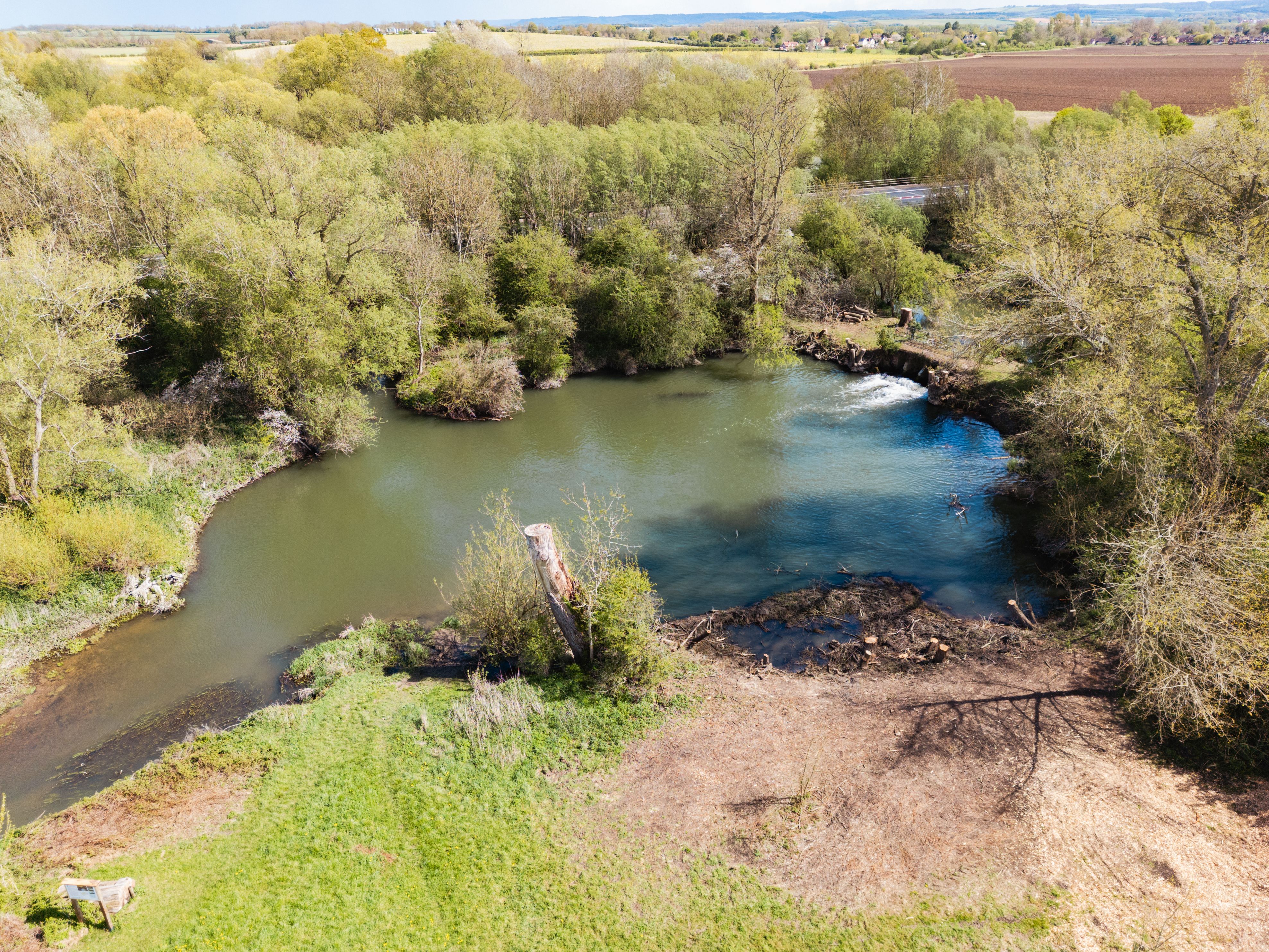
The Dorchester Fish Passage and Weir Removal Project at Buck Pool on the Hurst Meadow in Dorchester-on-Thames is moving into its delivery phase from mid-July 2026, following several years of design work, environmental surveys, technical assessments and community engagement.
This is an exciting stage of the project, which has been carefully planned by River Thame Conservation Trust, the Environment Agency and engineering and fisheries specialists.
Once complete, the project will reconnect the River Thame with the River Thames by removing one of the most significant barriers to fish migration in the catchment while maintaining the way water flows around Hurst Water Meadow.
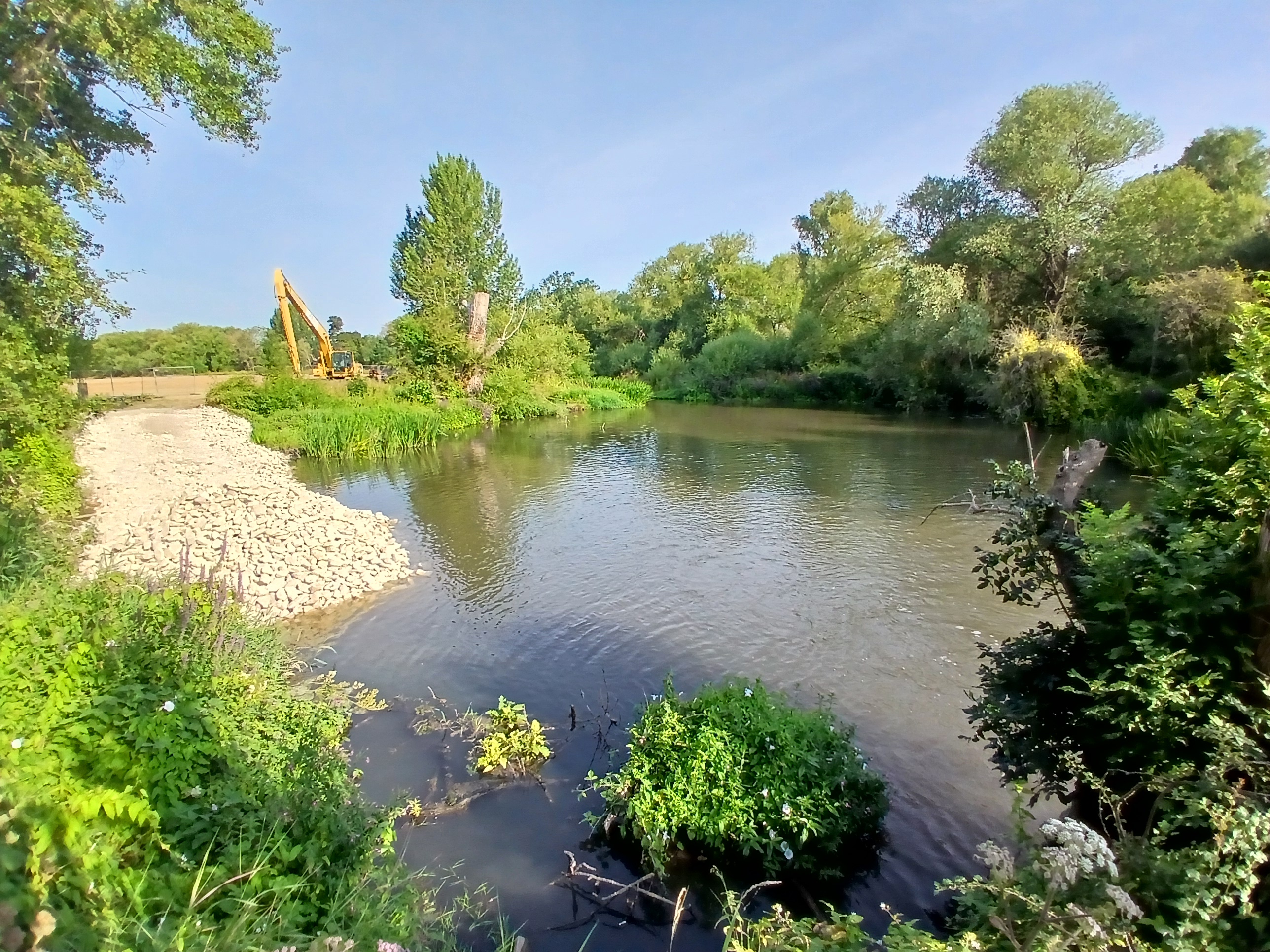
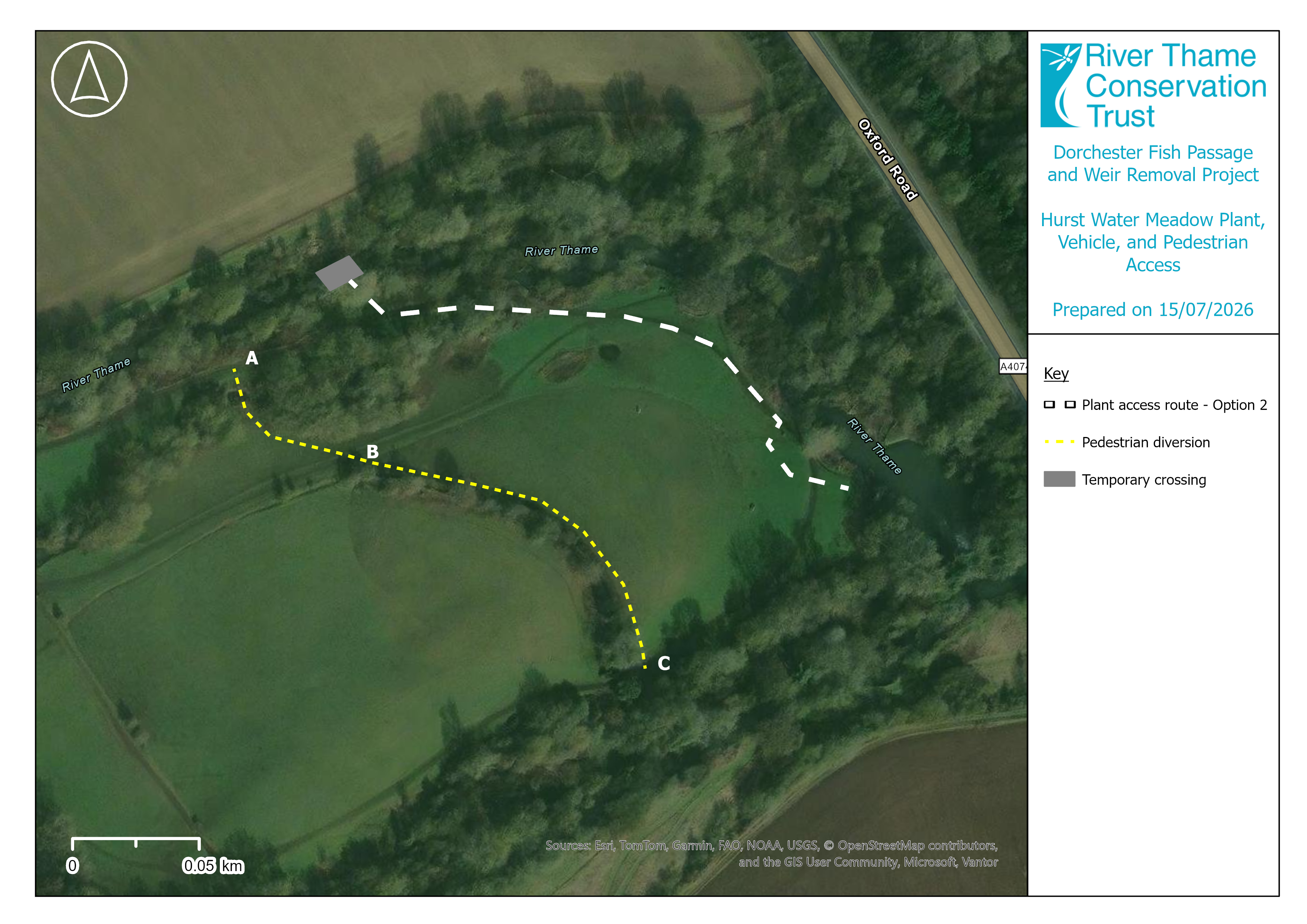
Over the coming months, visitors to Hurst Water Meadow will notice temporary changes as construction gets underway. If you're visiting the meadow, don't be alarmed if you see:
• A temporary river crossing to allow construction vehicles to access the work area.
• Construction traffic, including lorries and heavy machinery.
• A temporary diversion of the permissive footpath around the construction area.
• Lower-than-normal water levels in part of the River Thame during construction.
These changes are temporary and carefully managed to protect both wildlife and the river while the work is carried out.
Reconnecting the Thame with the Thames
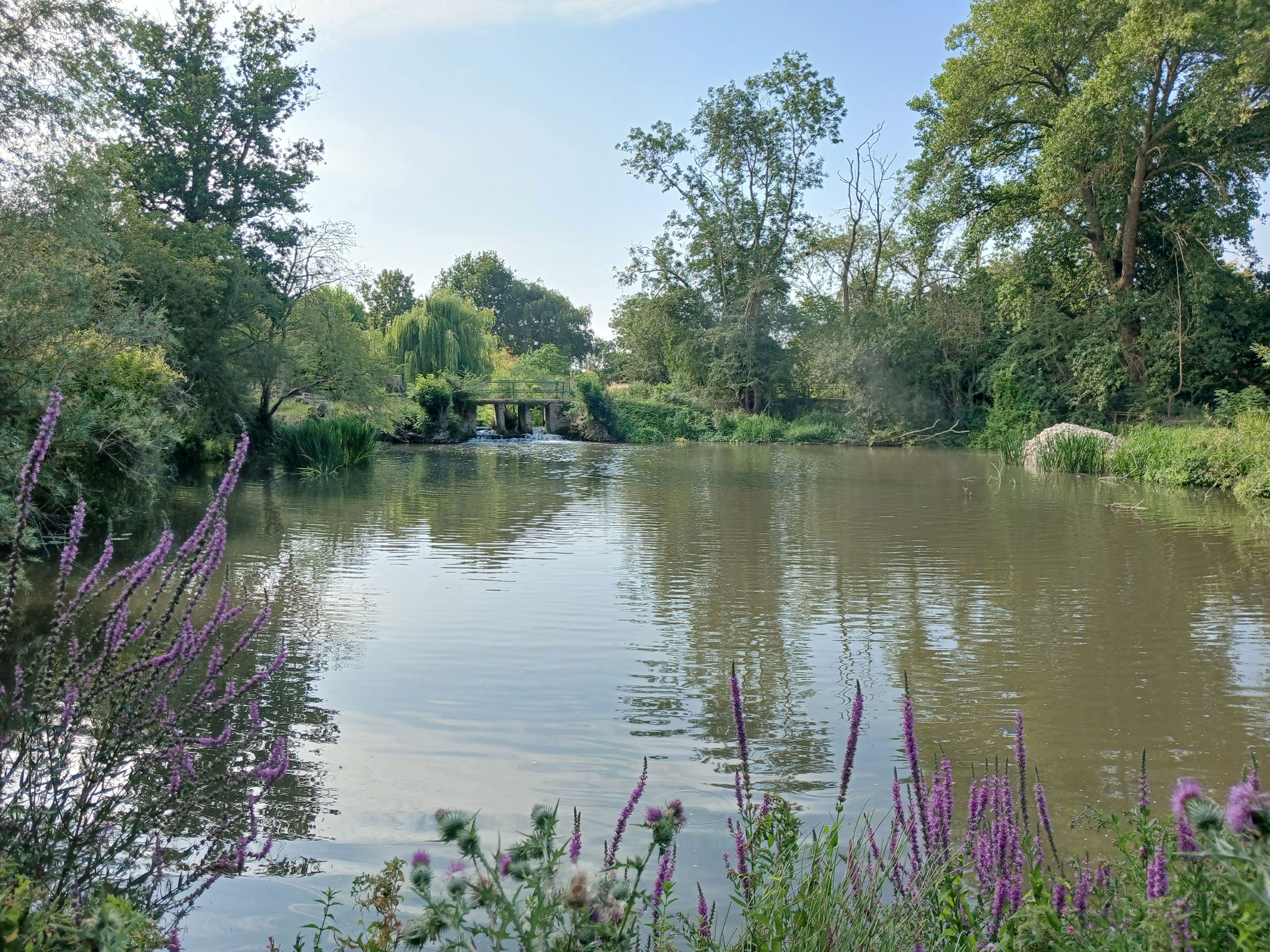
The River Thame joins the River Thames at Dorchester-on-Thames just downstream of the project site. For many years, the weir complex at Buck Pool and Overy Mill has prevented fish and eels from moving freely between the two rivers, cutting the River Thame and its tributaries off from the wider Thames river network.
Once complete, the project will reopen around 18 kilometres of the River Thame and four tributaries to migratory fish and other aquatic wildlife.
Restoring this connection will help fish reach spawning grounds, find food, recover from pollution events and respond to changing river conditions, making fish populations and the wider river ecosystem more resilient to pressures such as drought, pollution and climate change.
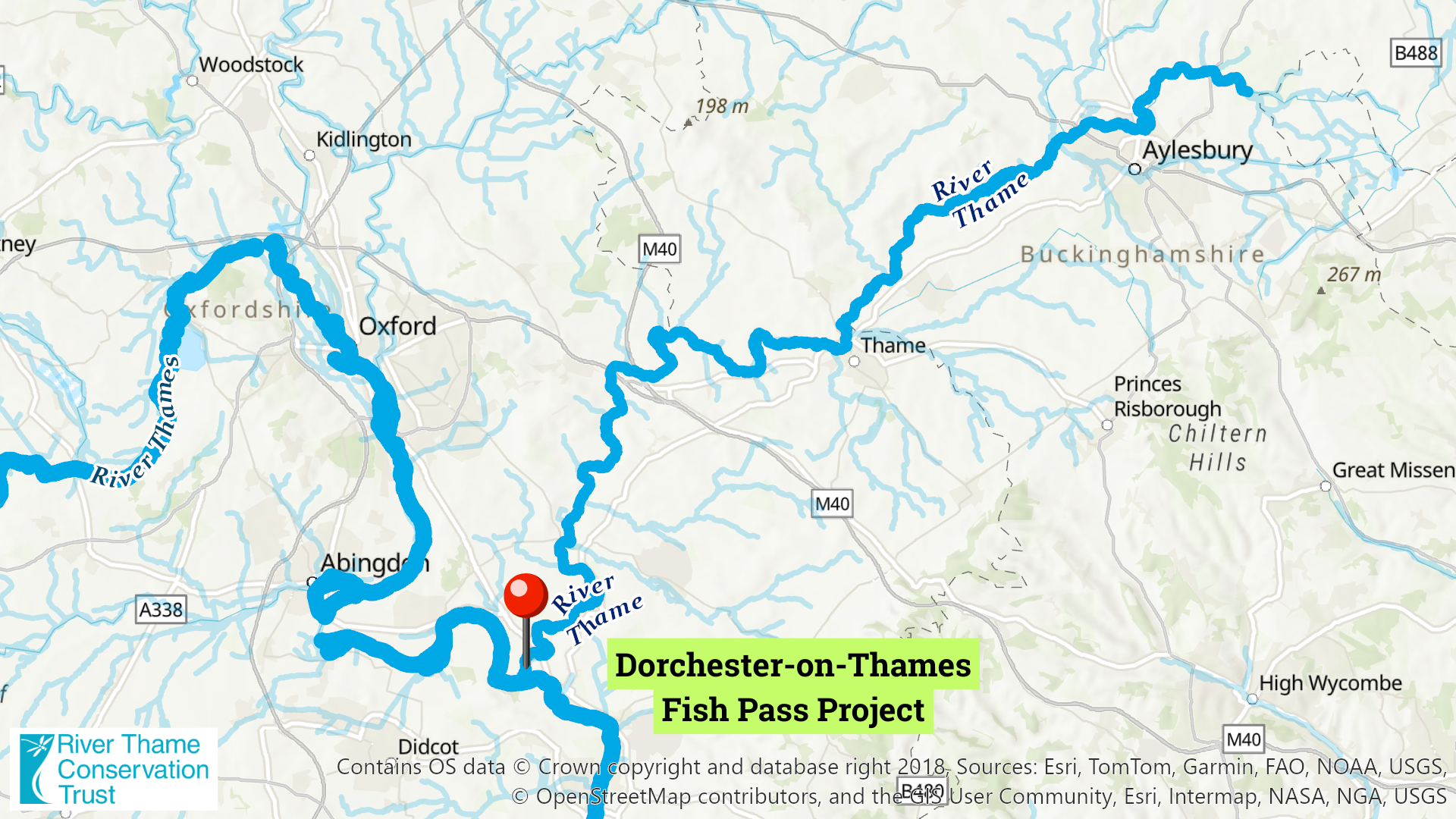
To understand the project, it helps to understand how this stretch of river works.
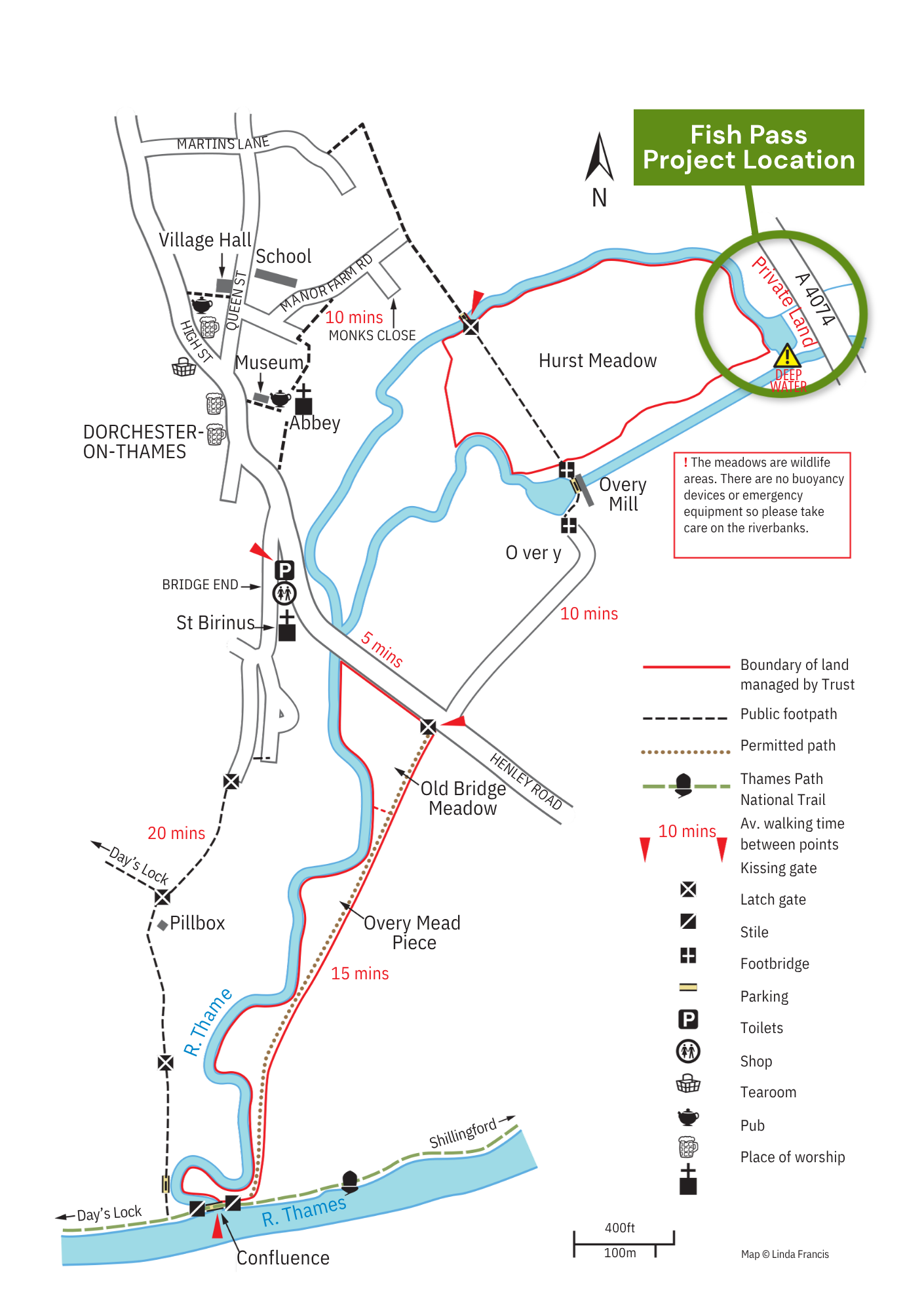
As the River Thame approaches Hurst Water Meadow it divides into two channels. The southern channel is the historic mill race, created centuries ago to provide a reliable supply of water to power Overy Mill. Although man-made, the mill race has become an important habitat supporting fish, aquatic insects and other wildlife.
The remainder of the river flows around the western/northern side of Hurst Water Meadow, passing over the Buck Pool weir into the weir pool and around the northern side of the Hurst. The two channels then rejoin just upstream of Henley Road Bridge before flowing into the River Thames.
The Fish Passage Solution
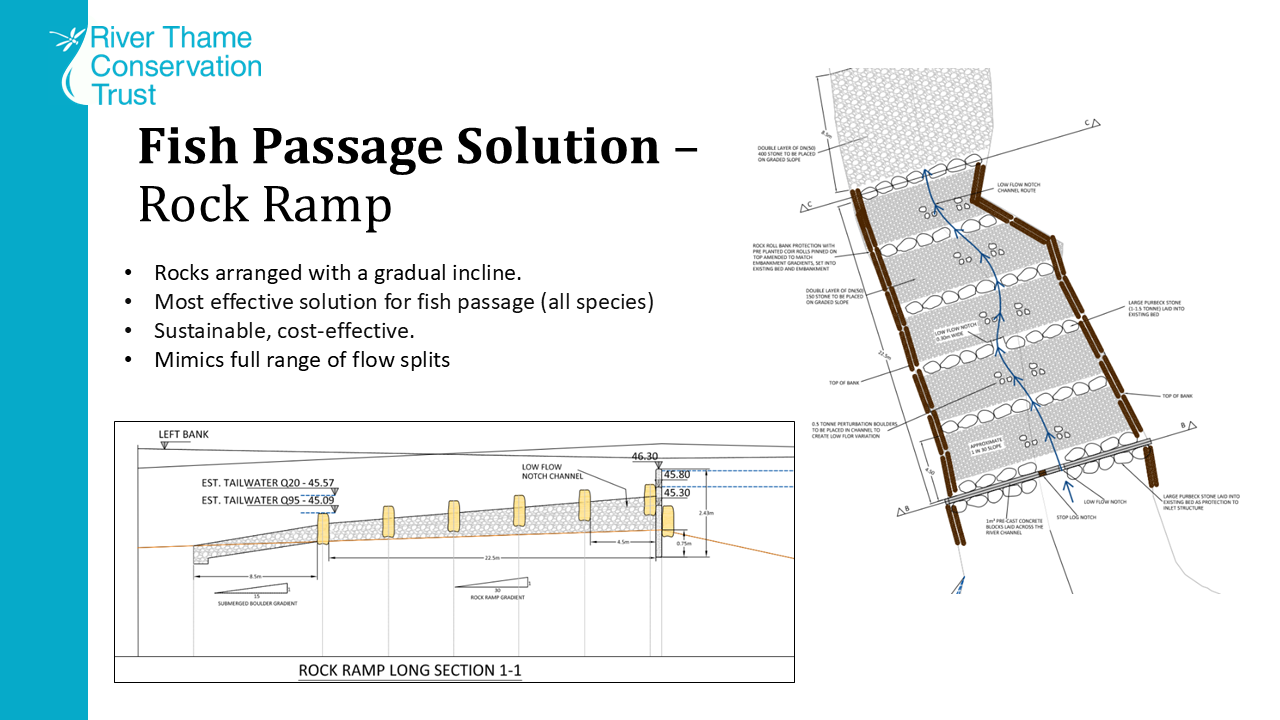
The challenge at Buck Pool is more complex than simply removing the existing weir. Although it prevents fish from moving upstream, the weir also controls how water is shared between the River Thame and the Mill Race. Removing it without replacing this hydraulic control would alter water levels and flow patterns in the Mill Race, affecting valuable habitats and could influence localised flood risk.
Following several years of hydraulic modelling, environmental surveys and engineering design, the project team optimised the design into a natural-looking rock ramp, which offered the best solution.
The existing weir will be removed and a gently sloping rock ramp, with a hydraulically designed inlet, will be constructed downstream of the Buck Pool. Instead of a single vertical drop, the new structure will create a sequence of pools, riffles and small changes in water level, allowing fish to move upstream in stages while providing resting places and differing velocities suitable for a wide range of species.
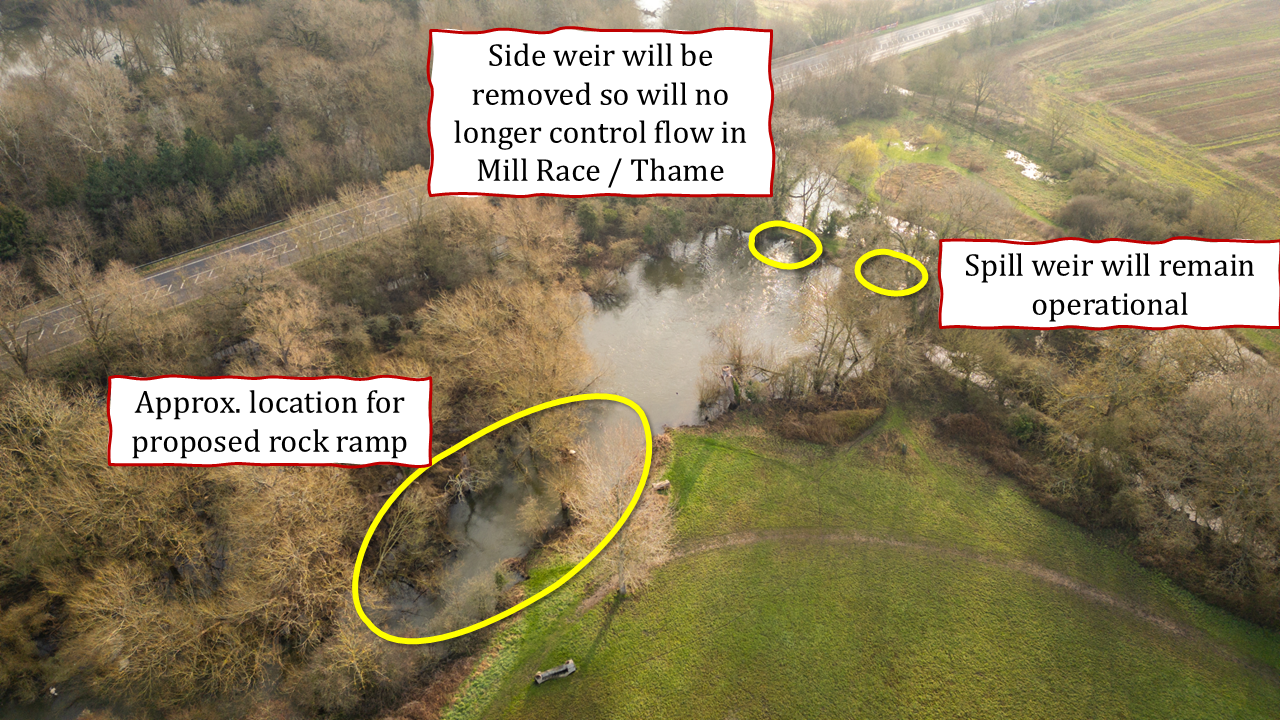
At the same time, the rock ramp has been carefully designed to continue regulating water levels and the distribution of flow between the River Thame and the Mill Race, preserving the way water moves around Hurst Water Meadow and improving the flood risk on the Mill Race by encouraging high flows onto the Hurst floodplain.
Construction and temporary changes to the river
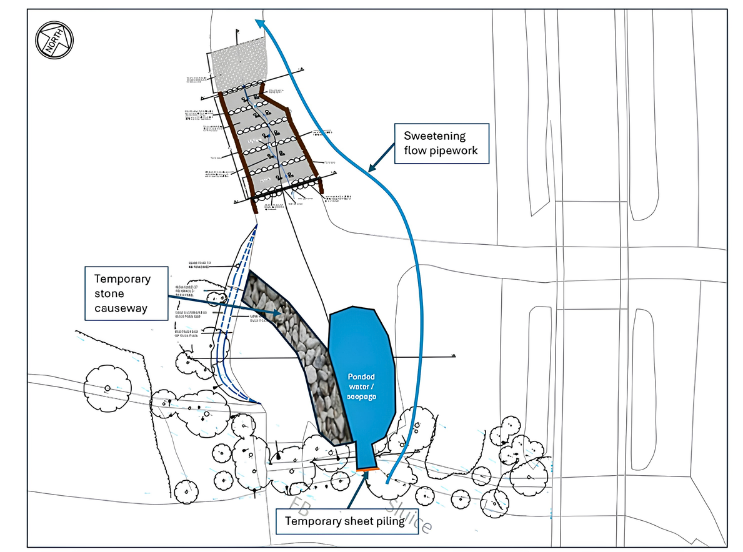
Constructing the rock ramp requires working directly within Buck Pool and just downstream. To create a dry working area, temporary barriers will be installed across the upstream end of the pool, forcing most of the river's flow to be diverted down the Mill Race.
As a result, water levels between Buck Pool and the point where the two channels rejoin upstream of Henley Road Bridge will temporarily become much lower than normal. A temporary pumped "sweetening flow" will continue to supply water to the downstream river.
Before water levels are lowered, specialist fisheries contractors, working alongside the River Thame Conservation Trust staff and volunteers, will carry out a fish recovery operation. Fish will be carefully captured using electrofishing and hand-netting techniques before being relocated to suitable habitat downstream. Throughout construction, water levels, temperature and dissolved oxygen will be monitored.
What happens next?
Construction will continue throughout the summer of 2026. While the works may temporarily change the appearance of Buck Pool and parts of Hurst Water Meadow, these changes are an essential part of delivering a permanent improvement for the River Thame.
We'll continue to share updates as construction progresses, including photographs, milestones and opportunities to learn more about the project.
We would like to thank the local community and everyone who visits Hurst Water Meadow for their patience and understanding while these works are carried out. We are also grateful to the Hurst Water Meadow Trust for their ongoing support, and to our principal funders, the Environment Agency and Garfield Weston Foundation, whose support has made this project possible.
We look forward to sharing the completed fish pass and celebrating the reconnection of the River Thame with the River Thames.
Stay up to date with our work with quarterly updates straight to your inbox
We will hold your data in accordance with GDPR law and you data will never be passed onto a third party without your prior permission.
Read past issues of our newsletter here.
We are a small registered charity and rely on grants and donations to keep our important work for wildlife and water quality going.
If you’d like to support us by making a one off or regular donation you can below.


.png)